
How to Spot a 45 RPM Record in Jacksonville
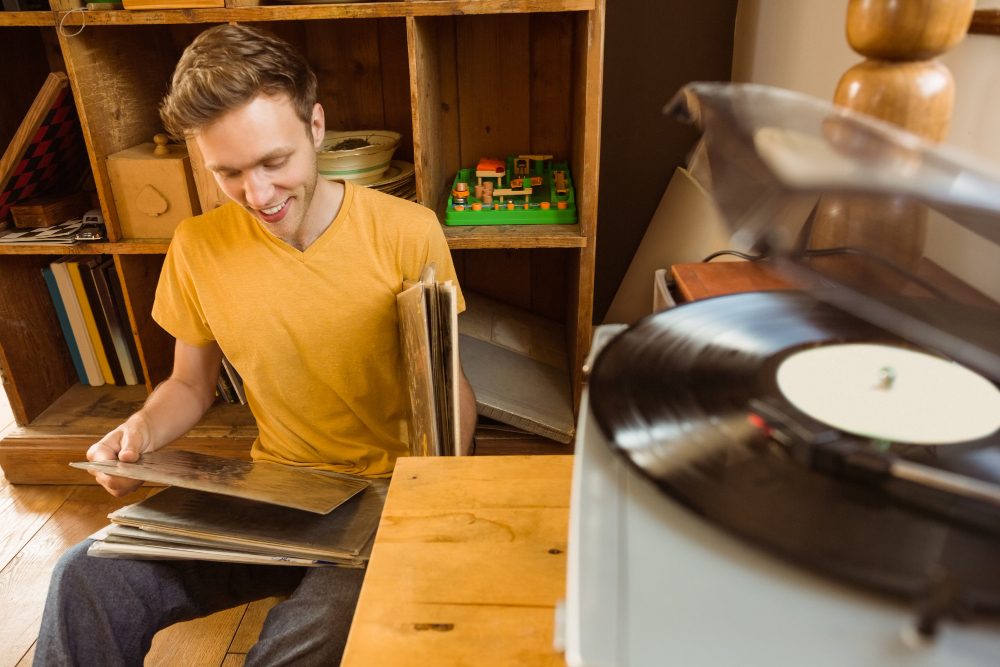
A 45 RPM record is a 7 inch disc made to spin at 45 revolutions per minute, usually with one song on each side. Many American 45s have a large center hole, a design RCA Victor introduced in 1949, and the label normally prints the speed. Boxes of 45s are a regular sight on the in home record buying visits our Cash For Records team makes from Jacksonville Beach, FL.
They come from a parent’s old favorites or a retiring DJ’s crates. Because they are small and plentiful, they are often the part of a collection people overlook. Knowing what you have shows where they sit when the time comes to sell records and vinyl collections, and which ones to set aside as keepers.
What Makes a Record a 45?
The name comes from the speed. RCA Victor launched the 7 inch 45 in 1949, a year after Columbia brought out the LP. The two formats largely split the market, with albums on LPs and hit songs on 45s. For decades the 45 was the format for radio play, jukeboxes and single sales.
Each side usually holds one song a few minutes long. The A side carried the song the label was promoting, and the B side held another track, sometimes a rarity in its own right. Some 7 inch records hold more, such as EPs with two songs a side. A few of those play at 33⅓, so the label is worth reading every time.
Signs You Are Holding a 45 RPM Record
Most of these checks are quick and need no turntable or tools. Look for several clues at once, since any single one can mislead on its own.
- Size: 7 inches across, a little over half the width of an LP.
- Center hole: a wide hole on many American pressings, far larger than an LP’s. Some 45s have a small hole instead, and some have a push out center still in place.
- Label: “45,” “45 RPM” or “45 r.p.m.” printed near the title. A small hole 7 inch disc without it may be an EP at 33⅓.
- Track count: one title per side. More titles usually means an EP.
- Sleeve: plain paper, a company sleeve with the label’s logo, or a picture sleeve with artwork, which collectors value in its own right.
Wide hole 45s often carry a plastic insert, sometimes called a spider, so they fit a standard spindle. Leave those inserts alone, because prying them out can damage the disc near the label. To see the full range of formats, check out the chart of vinyl record sizes and dimensions, which lays them side by side.
Why Two 45s That Look Alike Can Be Worth Different Amounts
Value rests on artist, genre, pressing, rarity, current demand and condition, and with 45s the pressing detail carries real weight. A promotional copy, an early label variation or an original release on a small regional label can sit next to a common reissue of the same song in the same box. The label and the runout groove are where those differences show. The runout groove is the smooth band near the center where codes are etched.
Condition separates the rest. Many 45s were played hard, so they show worn grooves that look dull and gray under a lamp instead of glossy. A copy in Very Good condition plays well with occasional pops, while one graded Good plays through with steady noise and visible wear. A slightly more formal version: Speed is also a factor, and a comparison of 45s against 33s shows what differs between the two.
Pressings are hard to judge from a photo.
Nobody needs to sort or tally every single one before calling Paul how many boxes you have and where they are stored, and he will say whether the collection fits an upcoming buying trip.
45s in DJ Collections and Mixed Boxes
Estates, downsizing moves and DJ retirements bring many of our calls, and a DJ’s crates often mix 45s, 12 inch singles and LPs. The 12-inch single is the trap. It is the size of an LP but usually plays at 45 rpm with one or two tracks per side, and it became a DJ staple in the 1970s, so a box marked “45s” may hold both. Estate boxes often hide a short stack of 45s behind the LPs, so check the back of every shelf.
Paul concentrates on jazz, blues, soul and R&B, rock, punk and metal. When a box of singles leans toward other genres, describe it on the phone and he will say plainly whether it fits. Mixed boxes are fine as they are, since Paul sorts formats on site. Note where the boxes have been sitting, too, because a closed Florida garage can warp thin 7 inch vinyl and split sleeve seams.
How Paul Grades 45s at Your Home
Paul Robinson has bought records since 2001, and he makes every visit himself for our family-run business in Jacksonville Beach, FL. He brings his own equipment, so you do not need a turntable. He listens to each 45 for skips and surface noise, and checks it under strong light for scratches and worn grooves. Sleeves get a separate grade, so a torn sleeve is not held against the disc inside.
Please leave the records unwiped and unwashed before he arrives, because a cleaning attempt can do more harm than good. Paul explains how he reached his offer on everything he can buy, and accepting it means payment at the visit. In our Google reviews, Sandra B. wrote, “Having never sold any records I was a bit cautious about the whole process. Paul and Grace made it a pleasant experience.”
Describe your crate of 45s and we will take it from there.
Send us the rough count, the main genres and where the records are stored is all Paul needs to judge the fit. With a visit to your home, you never list, pack or ship a single record, and if you decline, nothing leaves the house.
Related Topics: