
Vinyl Record Sizes and Dimensions, From 7 Inch 45s to 12 Inch LPs
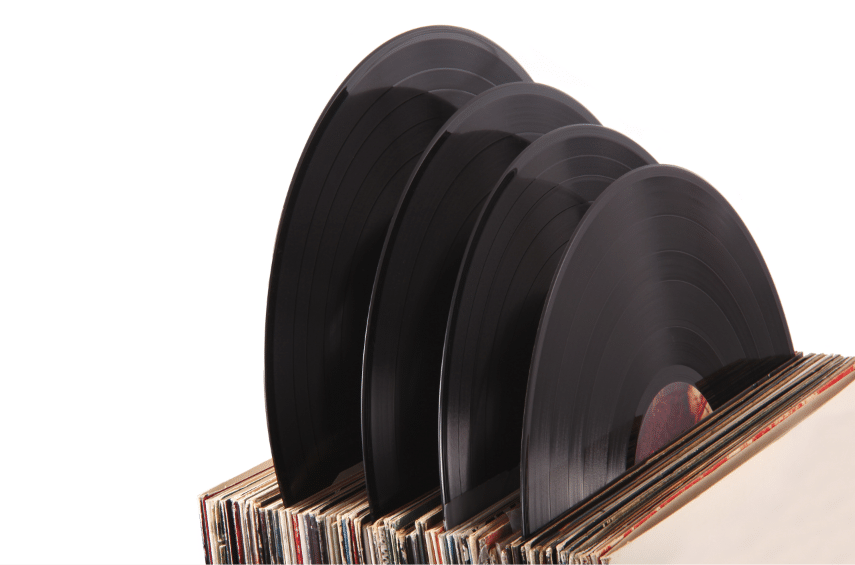
Vinyl comes in three standard diameters: 7 inch, 10 inch, and 12 inch. Measure across the disc, and you have narrowed the format, the speed, and often the decade. Our family has run Cash For Records since Paul Robinson started it in 2001. People who call us to sell vinyl records for cash in Jacksonville, FL describe their boxes by size before anything else. A crate of albums is one conversation, and a shoebox of 45s is another. Find a ruler before you call any buyer, because that measurement changes what you can tell us.
The Three Sizes That Cover Almost Every Collection
Records settled into standard diameters in the late 1940s. The industry has stayed close to them ever since, and the three sizes still account for nearly everything we pull out of a garage. Anything outside them is worth a second look, though around Duval County they turn up rarely.
Diameter is not a cosmetic choice. More surface area means more groove, and more groove means more playing time per side. The album and the 12-inch disc grew up together for that reason. A 7-inch disc has room for a few minutes of music, so it carried one song per side. That made it the format radio stations and DJs built their work around.
The 10-inch sat in an awkward middle ground. It offered more than a single and less than an album, which is part of why it faded from general release. Specialty pressings later brought it back, so it shows up at both ends of the timeline.
Knowing which of the three you hold clears up most of the guesswork before grading starts. We ask for a rough count by size when someone describes a collection by phone. That detail alone tells us whether we are looking at an album library, a singles library, or a mix. Those libraries sell differently, and they take different amounts of time to work through on site.
Diameter, Speed and Playing Time Are Linked
Speed and size travel together often enough that one predicts the other. A 12-inch disc almost always turns at 33 and a third revolutions per minute. A 7-inch almost always turns at 45, and the shellac-era 10-inch discs turn at 78. Exceptions exist, and they matter, which is why we read the label rather than assuming.
Playing time follows from that combination. Slower rotation packs more music into the same stretch of groove. A 12-inch side at 33 and a third holds roughly twenty minutes. A 7-inch side at 45 holds a few minutes at most. Faster rotation moves more groove past the stylus every second. That gives the cutting engineer more room to work with, and the result tends to sound livelier and punchier.
The tradeoff between running time and headroom explains why the 12-inch single exists. Club and dance pressings lean on that format for exactly that reason. We have written separately about the differences between 45s and 33s if the speed side of this interests you.
A 12-inch disc spinning at 45 is the combination that catches people out. It looks like an album and feels like an album. What it holds is one or two tracks per side, cut at better fidelity than an album allows. Soul, disco, hip hop and dance titles arrived this way through the 1970s and 1980s. Plenty of them are worth real money now, so check the label before filing one with the LPs.
Record Dimensions, Sleeves and Jackets Measured
The disc is only part of what you are measuring. Every record travels inside something, and the sleeve runs slightly larger than the disc it holds. That clearance is small, usually a quarter inch or so on each side. It exists so the record slides in and out without the edge catching.
Here is how the three standard formats measure out, based on what passes through our hands regularly. Measure your own discs and jackets rather than trusting any chart outright. Pressings from different plants and different decades vary by small amounts, and old jackets swell with humidity.
| Format | Disc Diameter | Usual Speed | Sleeve or Jacket |
|---|---|---|---|
| 7-inch single | 7 inches | 45 RPM | Paper or card sleeve, a little over 7 inches square |
| 10-inch | 10 inches | 78 or 33⅓ RPM | Paper sleeve, a little over 10 inches square |
| 12-inch LP | 12 inches | 33⅓ RPM | Cardboard jacket, a little over 12 inches square |
| 12-inch single | 12 inches | 45 RPM | Card or printed sleeve, same footprint as an LP |
Thickness is the measurement most people skip, and it carries useful information. Standard pressings are thin enough that a dozen stack into a modest pile. Heavyweight pressings sold at 180 grams feel noticeably more substantial in the hand. Gatefold jackets open to double width and sit thicker on the shelf, since they often hold two discs.
None of that changes the diameter. It does change how a collection packs, and how long a box takes to sort.
The 10 Inch Record, and What Size Says About Age
The 10-inch format causes more confusion than the other two combined. It covers two eras that have almost nothing in common, separated by the arrival of the microgroove. Sorting those two apart is usually the slowest part of a visit when a collection runs old.
Shellac 78s Against Vinyl 10 Inch Pressings
Shellac 78s from the first half of the twentieth century are mostly 10-inch discs. They are heavy, brittle, and prone to cracking when handled carelessly. Vinyl 10-inch pressings from the 1950s onward are a different animal, lighter and more flexible, usually running at 33 and a third.
Telling them apart is straightforward once you know what to feel for. A shellac 78 has real weight for its size and sounds dull if you tap it. A vinyl 10-inch flexes slightly and rings. The groove on a 78 is visibly wider and coarser than anything cut later, and the label normally prints the speed. We keep the two groups separate on site, because the handling differs and so does the market.
Modern reissues use the 10-inch format too, often for EPs, acoustic sessions, and limited runs. Those turn up in newer collections and get forgotten in a quick count. Set them aside as their own group rather than folding them in with the albums. Some carry collector interest well beyond what their size suggests.
Reading Age From Size, Speed and Label
Size narrows the window a record came from without ever pinning the date. A 10-inch shellac disc points toward the 78 era. A 7-inch vinyl single points toward the decades after 1949. A 12-inch album could have been pressed any year from the late 1940s through last month.
Other markers fill in the rest. Label designs changed on a regular schedule at most companies. Matrix numbers etched into the runout area identify the stamper, and jacket construction shifted over time from paste-on slicks to printed card. Those details decide whether a record is an original pressing or a later reissue. The gap in value between the two can be wide, so our buyer reads all of them together. A closer look at the types of vinyl records breaks the formats down further.
None of this asks you to become an expert before calling a buyer. Size and speed are the two things anyone can read off a record in seconds. They are enough for us to picture what is sitting in your garage, and our buyer handles the rest at the appointment.
Sorting a Collection by Size Before You Call a Buyer
A rough sort by size is the most useful thing a seller can do before picking up the phone. It takes far less time than people expect. You are not grading anything, and you are not researching titles. You are grouping the collection so both of us know what we are dealing with.
Work through it in this order.
- Measure one disc from each stack, across the face of the record rather than the sleeve
- Count roughly how many fall into each size group, since an estimate within fifty is plenty
- Read the speed off the label, which prints 33, 45 or 78 on nearly every pressing
- Set aside anything that is not 7, 10 or 12 inches, because odd sizes deserve their own look
- Check whether the 10-inch discs feel heavy and brittle, which separates shellac from vinyl
That exercise usually takes half an hour on a few hundred records. What you end up with is a description we can act on. Something along the lines of four hundred albums, two hundred singles and a box of 78s does the job. We can tell you from that whether the collection fits what we buy, and roughly how long a visit will run.
How Size Factors Into What We Pay
Size by itself does not set a price. Artist, genre, pressing, rarity, demand, and condition decide what a record is worth. A common 12-inch album in rough shape is worth less than a scarce 7-inch single in clean condition. What size it is tells us which market a record belongs to, and that shapes how our buyer works through a collection.
Format shapes genre expectations too. Soul and R&B arrived heavily on 45. A deep box of 7-inch singles from the right labels looks promising before anyone plays a note. Jazz, blues and rock built their reputations on the 12-inch album. That is where our buyer spends most of a typical visit. The 12-inch singles sit in their own category, tied closely to dance and club music, and DJ libraries are usually full of them. A piece on how singles, EPs and LPs differ covers the naming side of that.
We buy soul and R&B, jazz, blues, rock, punk and metal across LPs, 45s, 78s and 12-inch singles. We are not currently buying country, big band, swing or pop. Size will not rescue a genre we do not handle, and a thousand singles from outside that list are still outside it. Ask us early rather than late, before you spend an afternoon counting.
Condition still decides the final number. A record that plays cleanly in a lightly worn sleeve beats the same title with a scratched surface and a split jacket. That holds at any diameter. Our buyer grades on site with a turntable and a strong light, scoring each record from Mint down to Poor. The grade then gets weighed against what the title is actually doing in the market.
Frequently Asked Questions About Vinyl Record Sizes
What are the three standard vinyl record sizes?
Records come in 7 inch, 10 inch and 12-inch diameters. The 12-inch disc holds full albums and usually turns at 33 and a third RPM. The 7-inch holds singles and usually turns at 45 RPM. The 10-inch covers both shellac-era 78s and later specialty pressings. Measure across the face of the disc to identify which one you hold.
Is a 12-inch record always an album?
No. A 12-inch disc turning at 45 RPM is a 12-inch single. It carries one or two tracks per side, cut at higher fidelity than an album allows. Dance, soul, disco, and hip hop titles were released this way in large numbers. Check the speed printed on the label before filing one with your LPs.
How big is the sleeve compared to the record?
Sleeves and jackets run slightly larger than the disc they hold. The clearance is usually around a quarter inch on each side, so the record slides in and out without catching. A 12-inch album sits in a jacket a little over twelve inches square. Measure your own, since pressings vary between plants and decades.
Does the size of a record affect what it is worth?
Not directly. Artist, genre, pressing, rarity, demand, and condition set the value. A scarce 7-inch single can easily outprice a common 12-inch album. The size tells a buyer which market a record belongs to and which genres to expect. That is why we ask for a count by size before scheduling a visit.
Are 78 RPM records a different size?
Most 78s are 10-inch discs pressed in shellac rather than vinyl. They feel heavier and more brittle than anything from the microgroove era, and their grooves are visibly wider. Some 12-inch 78s exist as well. Handle them carefully and group them separately, because they chip and crack far more easily than vinyl.
Talk to Our Buyer About Your Collection
Tell our team how many discs fall into each size group, which genres dominate, and what shape the records and sleeves are in. We will let you know whether your collection qualifies for a visit. We travel to you, grade everything in person, and pay cash on the spot for what fits. No shipping and no listings at any stage, whether the boxes hold four hundred records or four thousand.
Call or text
904-299-3683.
We travel to you across Jacksonville, Jacksonville Beach, and Duval County, grade everything in person, and pay cash on the spot, whether the boxes hold four hundred records or four thousand.