

How Vinyl Records Are Pressed: From Lacquer To Your Turntable
There is something almost magical about dropping a needle onto a vinyl record and hearing music fill the room. But the process that makes that possible is more fascinating than most people realize. Making a phonograph record involves chemistry, precision machinery, and a series of steps that have been refined over decades of sound recording and reproduction, giving collectors even more to appreciate when they sell vinyl records.
If you have ever wondered what actually happens between a recording session and the moment a record lands on your turntable, this is for you.
It All Starts With the Master Recording
Before a single record is pressed, the music has to be prepared through a process called mastering (audio). This is where an engineer shapes the sound – adjusting frequency balance, levels, and dynamics – so it translates well to vinyl.
The mastered audio is then fed into a lathe, a precision cutting machine. The lathe uses a sapphire or diamond-tipped stylus to cut a continuous spiral groove into a lacquer-coated aluminum disc. This disc is called an acetate disc, and it holds the physical blueprint of the entire recording.
The depth and width of those grooves carry all the information – left and right channels for stereophonic sound, or a single channel for monaural sound. It is an incredibly delicate process.
Any vibration or dust in the cutting room can introduce noise or distortion into the groove.
From Lacquer to Metal: The Electroplating Process
Once the lacquer is cut, it gets shipped to a pressing plant. Here is where things get interesting.
The lacquer is coated with a thin layer of silver to make it electrically conductive. Then it goes through electroplating, where nickel is deposited onto the surface under carefully controlled pressure. The result is a rigid metal negative of the original groove, called a stamper.
Sometimes a secondary mold – called a mother – is made from the first metal positive, and additional stampers are created from that. This extends the life of the original lacquer and allows for higher production runs without degrading sound quality.
Each stamper fits into a record press, the large machine that will eventually form the physical disc you hold in your hands.
What Is a Biscuit?
Before pressing, the raw vinyl material needs to be prepared. Vinyl records are made from polyvinyl chloride – a durable plastic that softens under heat and hardens as it cools.
This material is formed into a small, thick blob called a biscuit. Some plants create biscuits through extrusion, pushing the PVC compound through a shaped opening to create a consistent puck of material. The biscuit is essentially the blank canvas that will become your record.
The Press: Where Heat and Pressure Create a Record
This is the step most people picture when they imagine a vinyl record being made.
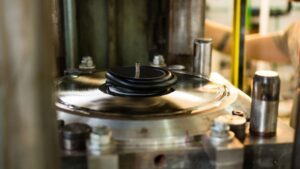
The biscuit is placed between two stampers inside the record press. Steam is used to generate intense heat, softening the PVC. Hydraulic pressure then forces the softened material to flow into every detail of the stamper’s grooves.
The machine holds the heat and pressure for a controlled length of time before switching to cool water, which rapidly hardens the vinyl. When the press opens, a fully formed phonograph record is ejected – complete with grooves, center hole, and label area.
Speaking of labels – the record label itself is actually pressed directly into the vinyl during this step. Small paper labels are loaded into each side of the stamper before the biscuit is placed, so they bond permanently to the record surface during pressing.
White label records – the plain test pressings with blank or minimal labels – are produced the same way to evaluate sound quality before a full run begins.
Trimming, Inspecting, and Finishing
Fresh pressings come out of the machine with a thin ring of excess vinyl around the edge called flash. This gets trimmed away almost immediately, while the record is still warm and pliable.
The record is then visually and sometimes aurally inspected for pressing defects. Common problems include bubbles, scuffs, off-center pressings, and contamination from dust or debris in the mold. Quality control at this stage is what separates a great pressing plant from a mediocre one.
Once approved, records are sleeved, sometimes paired with a compact disc in special editions, and wrapped in shrink wrap before being boxed for distribution.
Why Vinyl Quality Varies
Not all records sound the same, even from the same plant. The grade of PVC used, the quality of the stampers, the precision of the press, and even the cleanliness of the production environment all affect the final sound.
Older records – especially early pressings from the 1950s through 1970s – were sometimes made with higher-quality vinyl and cutting technology that modern budget pressings cannot match. That is a big reason why original pressings of classic albums by artists like Miles Davis or John Coltrane are so highly valued by collectors. The technology of the era, combined with skilled mastering engineers, often produced results that are genuinely difficult to replicate today.
From Lacquer to Turntable: What Vinyl Pressing Really Involves
Understanding how vinyl records are made gives you a deeper appreciation for what you are actually holding when you pick up an album. From the lacquer cut on a lathe to the final product coming off a record press, every step matters. If you have old records sitting in storage and are wondering what they might be worth, Cash For Records has been helping collectors in Cleveland, OH, turn their collections into cash since 2001. Call us at 216-315-8216 to get started.