

Are Old Vinyl Records from the 1930s-1940s Valuable?
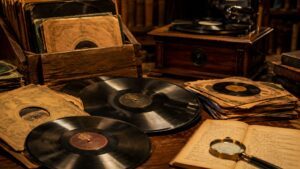
If you’ve stumbled across a stack of old records in a grandparent’s attic or inherited a collection from an estate, you might be staring at a pile of heavy shellac discs and wondering if they’re worth anything. The short answer is: some of them absolutely are. But the longer answer is more interesting, and it depends on several factors that go beyond age alone.
Let’s break down what makes records from the 1930s and 1940s potentially valuable, what typically drives their worth, and how to figure out what you might actually have.
What Kind of Records Were Made in the 1930s and 1940s?
Most records from this era are 78 RPM discs, which spin at a faster speed than the LPs and 45s most people think of when they hear “vinyl.” Technically, many 78s weren’t made of vinyl at all – they were pressed from shellac, a brittle, resin-based material. This is an important distinction because shellac records require more careful handling and are far more prone to cracking and breakage than later vinyl pressings.
That said, the music pressed onto these discs represents some of the most historically significant recordings ever made. We’re talking about early jazz, Delta blues, big band swing, country, and gospel – genres that shaped every major music movement that followed.
Do Age and Rarity Make 78s Valuable?
Age alone doesn’t determine value. A common, mass-produced 78 from a popular label in the 1930s might sell for just a few dollars, while a rare pressing from an obscure regional label could be worth hundreds or even thousands.
What collectors are really chasing is scarcity combined with demand. A recording that was only pressed in small quantities or that survived in limited numbers due to shellac’s fragility becomes genuinely rare over time. When that rarity intersects with musical importance or collector obsession, prices climb fast.
The Genres That Tend to Command the Highest Prices
- Early Delta blues recordings are among the most sought-after 78s in the world. Artists like Robert Johnson, Charley Patton, and Son House recorded during this era on labels like Paramount and Vocalion. Some of these records were pressed in tiny runs and distributed in specific regional markets, meaning very few copies exist today.
- Early jazz recordings from artists like Louis Armstrong, Jelly Roll Morton, and King Oliver also attract serious collectors. These recordings documented the birth of jazz as a genre and carry enormous historical weight.
- Big band and swing records from artists like Benny Goodman, Glenn Miller, and Duke Ellington were produced in much higher quantities, which generally makes them less rare – though exceptional condition copies on original labels can still fetch strong prices.
What Actually Determines Whether a 78 Is Worth Money?
Understanding the factors influencing vinyl record value is essential before you assume what you have is a treasure or write it off as junk. Here’s what matters most:
- Condition is the single biggest variable. Shellac is notoriously fragile. A 78 with chips, cracks, or deep scratches loses value dramatically. Surface noise and groove wear also affect playability, which collectors care about deeply. A pristine example of a common record will often outsell a beat-up copy of a rare one.
- Label and pressing matter enormously. Original pressings on rare labels – especially regional labels like Paramount, Gennett, OKeh, or Vocalion – are far more valuable than reissues or later pressings on major labels. The label itself, including the color, design, and catalog number, can tell you a great deal about when and where a record was manufactured.
- The artist and title are obviously central. Some artists from this period have passionate collector communities willing to pay serious money for the right record. Others, even talented and historically interesting musicians, have a much smaller audience.
- Demand fluctuates. The vintage record market shifts, and what’s hot today may cool off in a few years. That said, pre-war blues and early jazz have maintained strong collector interest for decades.
Common Misconceptions About Old Records and Value
A lot of people assume that old automatically means valuable. It doesn’t. There are millions of 78s from the 1930s and 1940s still in circulation, and most of them are fairly common big band, pop, or classical records that move slowly even at low prices.
On the flip side, some people toss out records assuming they’re worthless because they look worn or unfamiliar. That’s a mistake. A record with a plain, faded label from a small Southern label could be exactly what a serious collector has been hunting for years.
Another common misconception is that cracks or chips disqualify a record entirely. For extremely rare pressings, even damaged copies can hold value because they’re simply so hard to find in any condition.
Should You Try to Sell Old 78s Yourself?
It’s possible, but it takes research and patience. Online marketplaces like Discogs have become the go-to resource for record buyers and sellers, and they do provide a useful sense of what records have sold for. However, accurately identifying a pressing, grading its condition, and pricing it correctly requires experience. Misidentifying a record or overestimating its condition can lead to unsold listings and frustration.
If you have a large collection or an estate with dozens or hundreds of 78s, working with a professional buyer is often faster and more practical. A knowledgeable buyer can sort through a mixed collection, identify what’s genuinely valuable, and make you a straightforward cash offer without the overhead of listing, shipping, and dealing with individual buyers.
What About 78s Mixed in With Later Vinyl Records?
Many collections from estates or attics are mixed – some 78s from the 1930s and 1940s, some LPs from the 1950s through 1980s, maybe a handful of 45s. This is actually pretty common, and it doesn’t complicate things as much as you might think.
A buyer experienced with multiple formats can evaluate the full collection together. In some cases, the 78s are the most valuable part of what you have. In others, a rare original pressing of a 1960s jazz or rock album will far outweigh the older material. Every collection is different.
The Bottom Line on Pre-War Records
Records from the 1930s and 1940s occupy a fascinating place in music history and in the collector market. Some are genuinely worth serious money, particularly rare early blues and jazz pressings in good condition. Others are pleasant historical artifacts that don’t command high prices simply because they’re not rare enough.
The best way to find out what you have is to get your collection in front of someone who knows what they’re looking at. If you’re sitting on a box of old 78s and wondering whether there’s real money in that stack, don’t guess – get a professional opinion.
Cash For Records has been evaluating and buying collections since 2001, and the team travels directly to sellers throughout Ohio and the East Coast to provide honest, on-the-spot assessments. If old records are taking up space and you’d like to know what they’re worth, call 216-315-8216 to arrange a visit.