
How to Spot a 78 RPM Record in Jacksonville
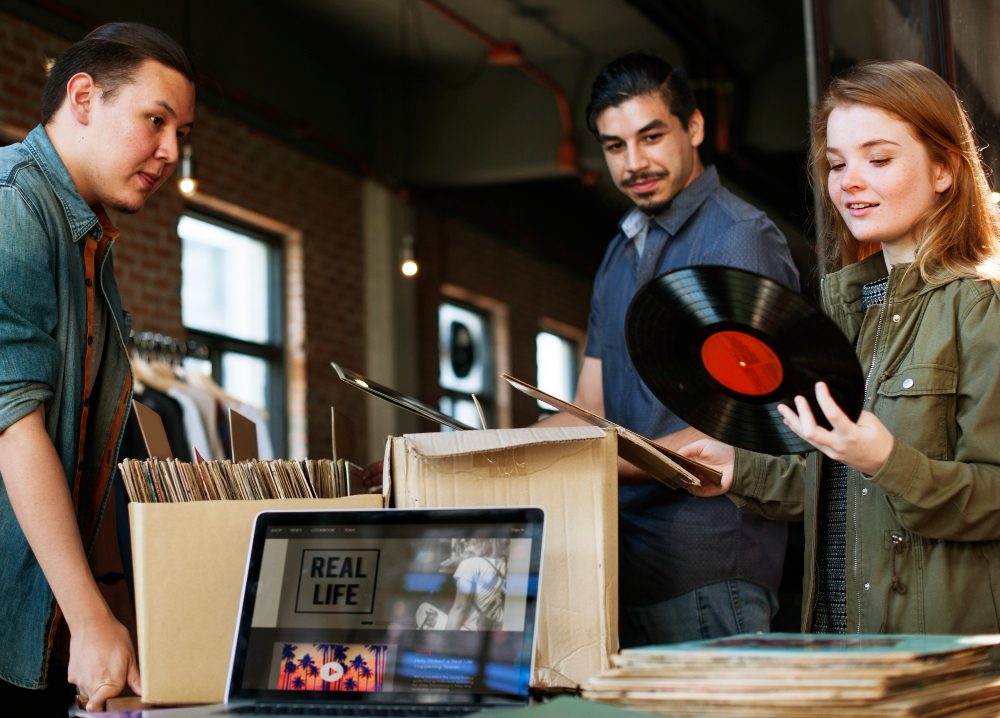
A 78 RPM record is a thick, heavy disc, usually 10 inches across and sometimes 12, made to spin at 78 revolutions per minute. Most are pressed from shellac rather than vinyl, so they feel rigid, will not flex and can crack if dropped. We buy 78s alongside LPs, 45s and 12 inch singles on our Cash For Records in home buying visits from Jacksonville Beach, FL. They get more careful handling than anything else in a collection.
78s were the standard format until the 1950s, which is why they often turn up in estate collections, tucked into paper sleeves or bound albums. Weight, stiffness and a label with one song per side are the quickest signs, and knowing what is in the stack helps when you decide to sell old records for cash.
What Is a 78 RPM Record?
The 78 was the main format for recorded music for decades, until the LP and the 45 took over in the 1950s. Each side holds only a few minutes of music, which is one reason popular songs of that era ran short. Longer works came as sets of several discs in bound books of paper sleeves, and the word album comes from those books.
Shellac is a hard, brittle material mixed with fillers, and it gives 78s their weight and their fragility. The flexible vinyl used for LPs and 45s behaves differently in the hand. A few late 78s were pressed on vinyl and flex slightly, so stiffness is a strong clue but not the only one
Five Ways to Tell a 78 From Other Records
You can run most of these checks with the record half in its sleeve. Handle each disc by the edges and the label, and keep 78s off flat stacks while you look.
- Weight: a 78 feels heavier than its size suggests, often as heavy as a full LP or more.
- Stiffness: shellac is rigid and gives no flex when held by the edge. Never bend a disc to test it.
- Thickness: 78s are thicker than LPs, with a blunt edge.
- Label: many 78s print the speed, but older ones often do not, so one title per side and an older label design count as clues.
- Grooves: under a lamp, 78 grooves look coarser and wider apart than the fine grooves on an LP.
Size alone does not decide it. A 10 inch disc can also be an early LP, and a 12 inch disc can be a 78 holding classical music or a longer jazz performance, so weight and stiffness deserve the most trust. The topic is covered in more detail in a dedicated article on identifying and valuing shellac 78s.
How to Handle and Store 78s Until Someone Looks at Them
Shellac breaks easily when dropped. Keep 78s upright in their sleeves, packed snugly enough that they do not lean, and never pile them flat, where the discs on top press down on the ones below. Carry them a few at a time, held by the edges. A sturdy box with the discs standing on edge is safer than any pile.
Heat and damp matter too. A Florida garage or attic gets hot enough to harm records, and humidity leaves mildew on paper sleeves and album books. Skip any cleaning before the visit, since some products can damage shellac and an unsuitable cloth can leave a disc worse off than the dust did. Cleaning vintage 78 records calls for a different approach, and this guide explains why the usual vinyl methods don’t apply.
Leave the heavy records where they are.
Describe them on the phone instead. Paul handles 78s on site, so nothing has to be boxed or carried out before he arrives, and he will say whether the collection fits an upcoming buying trip.
What Makes a 78 Worth Something
Age alone does not make a 78 valuable, and many are common. The same six factors apply to every format: artist, genre, pressing, rarity, current demand and condition. Early jazz and blues 78s, especially on smaller labels, often draw strong collector interest, and a short stack of those can outweigh a crate of popular dance numbers from the same decade.
Shellac carries more natural surface noise than vinyl, so a 78 is graded against what the format can do. Skips, cracks, chips at the edge and heavy wear count for more than ordinary hiss. Paul’s focus genres are jazz, blues, soul and R&B, rock, punk and metal in every format. When a stack of 78s leans toward other genres, he will say plainly on the phone whether it fits.
How Paul Handles 78s at a House Call
Paul Robinson started buying records in Cleveland, Ohio, in 2001, and our family run business is now based in Jacksonville Beach, FL. He brings his own equipment, so you do not need a turntable that runs at 78. He play grades each disc, listening for skips and surface noise, then checks it under strong light for cracks, chips and worn grooves. Each paper sleeve or album book is judged separately from the disc inside.
Fragile records are safer when someone experienced does the boxing and carrying. Paul packs and carries everything he buys, so there is nothing for you to list, pack or ship. He explains how he reached his offer, and accepting it means you are paid at the visit. Sellers have given us a 5.0 star rating on Google, and families clearing an estate make up a steady share of those calls.
Tell us roughly what the stack holds.
Paul will set up a visit on a planned buying trip, and if you decline his offer, nothing leaves the house.
Related Topics: