
How to Protect Vinyl Before Selling in Jacksonville, FL
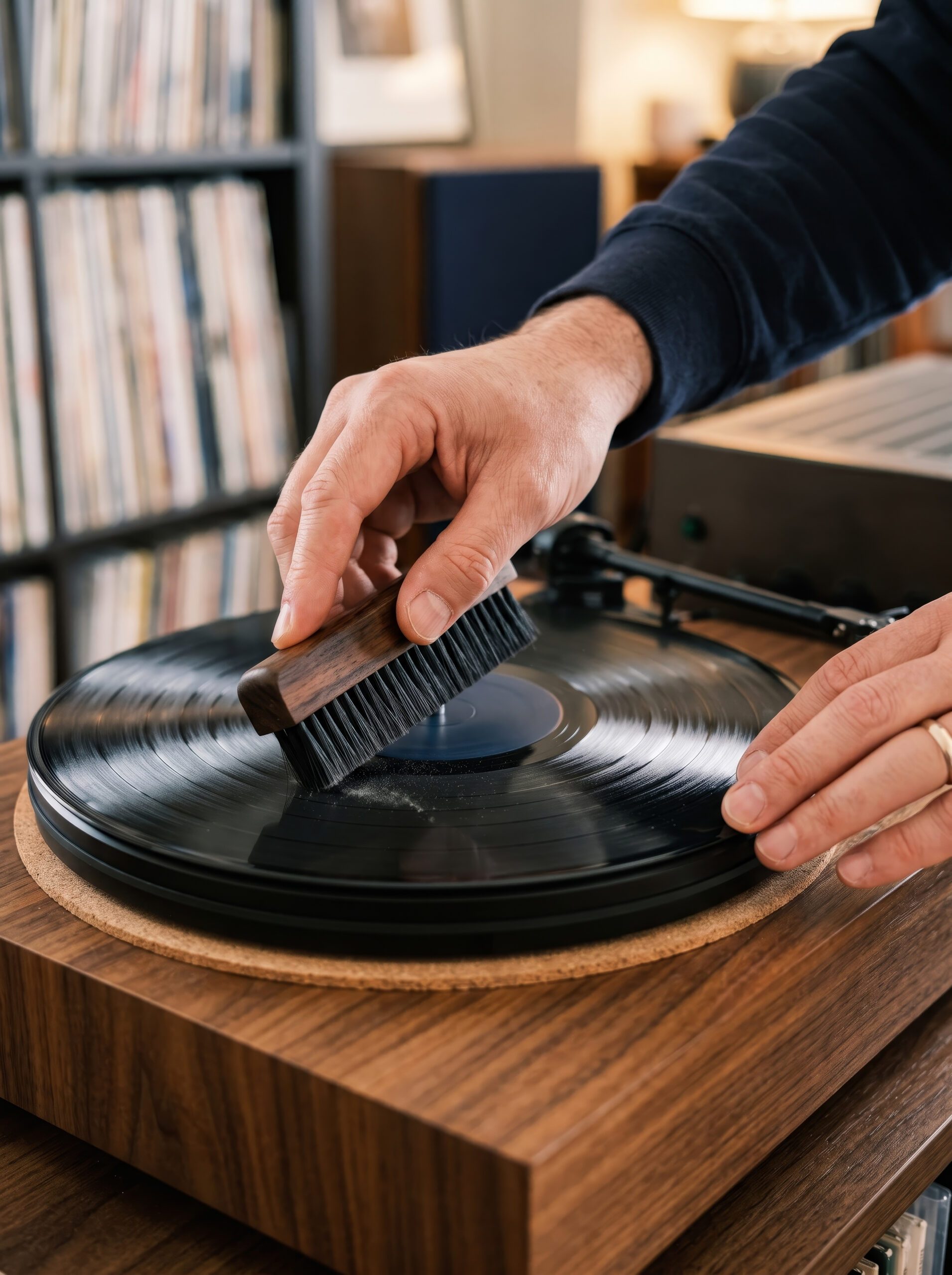
Heat and humidity do more damage in one Florida summer than twenty years of listening ever will. We have bought collections since 2001, and the thing that most often costs a Jacksonville seller money is a garage. Records kept upright in a cool interior room grade better. The same album can be worth twice as much in one house as it is two streets over. Move the boxes indoors and you can safely sell vinyl records without losing value to the weather first.
What Florida Weather Does to a Record Collection
Vinyl is a plastic, and plastics soften well before they melt, which matters because a closed garage holds July heat for hours. Records stacked flat begin to sag under their own weight. The result is a shallow dish-shaped warp that makes a tonearm ride up and skip. Nothing has to be dramatic for the damage to land, since a few hot afternoons in the wrong room will do it.
Humidity works more slowly and does worse. Damp cardboard grows mold, and the spores move from the jacket to the record surface and into the inner sleeve. We have opened boxes here where the spines looked clean and the backs were furred white. That collection graded far below what the titles deserved. Coastal air near the Beaches adds salt, which is hard on anything paper.
The pattern is consistent enough to plan around. Collections stored in living rooms, bedrooms and closets usually arrive in good shape. Collections stored in garages, sheds and unconditioned units usually do not, and the difference lands directly in the offer.
Where the Collection Sits Matters More Than How It Looks
Sellers often tidy before we arrive, which is kind and changes almost nothing. What we read is where the records have lived for the past few years. That history is already written into the vinyl and the cardboard. A dusty collection from a spare bedroom beats a spotless one from above a garage ceiling.
If you have any warning before a sale, relocate the collection. Choose an interior room away from exterior walls, off the floor, out of direct sun and away from air vents. Records belong upright, like books, with enough support to stand straight rather than lean. Leaning warps a collection slowly, and stacking flat warps it quickly.
Give it a few weeks indoors if you can. Cardboard that absorbed moisture gives some of it back in a conditioned room. Sleeves that felt soft and heavy often firm up again. That will not reverse mold or a warp, though it stops both from getting worse while you decide what to do. Once the records are settled indoors, knowing how to store vinyl records safely keeps moisture, mold and warping from coming back.
Sleeves Carry Value Too, and They Are Easier to Ruin
Worried your garage or storage spot already did damage?
Tell us where the collection has been sitting, and we’ll say what we expect to find before you move a thing.
Call or text Paul Robinson at 904-299-3683What to Do in the Two Weeks Before a Buyer Arrives
Most of this costs nothing and takes an evening. The point is to stop active damage, then let us see the collection as it really is rather than staged. Heat is the first thing to shut down, and how hot is too hot for vinyl records covers the thresholds.
- Move the boxes indoors to an interior room, off the floor and out of the sun.
- Stand the records upright in whatever holds them, loosely rather than packed tight.
- Open any sealed boxes so trapped humidity escapes, and check for a musty smell.
- Separate anything with visible mold into its own box so it does not spread.
- Leave cleaning, wrapping and sorting alone beyond that, since we grade on site.
That last point matters more than it sounds. Every year we meet sellers who spent a weekend reorganizing a collection into an order that slowed the visit down.
What We Check When We Walk In
Our first pass is the room rather than the records. We look at where the collection sits and what the floor is made of. We check whether a vent blows directly on it and whether the boxes feel damp. All of that predicts what we are about to find inside. Then we pull records at random from different parts of the collection, since the front of any stack is the best-kept part.
From there we grade properly. Play grading puts a record on a turntable and listens for skips and surface noise. Visual grading holds it under a strong light until scuffs and warping show. Halogen light or direct sun works best, which is why we bring our own rather than trust a ceiling fixture. Both methods run on every collection, and the condition tiers they feed into follow the same standards used in vinyl record grading across the trade.
We explain what we see while we work, so if heat got into a stack, you hear it from us at the time. If the damage is confined to one box out of twenty, we say that too. Jacksonville summers are hard on records, and more heat history than you would like is still normal. We price around it rather than walk away.
Ready to find out what the collection is worth?
Send us the rough count, the main genres, and where the records have been stored. We’ll arrange a house call across Jacksonville, Jacksonville Beach and Duval County, grade everything on site, and pay cash on the spot.
Related Topics: