

What Is a Test Pressing Vinyl? Why It Matters To Collectors And Audiophiles
If you’ve spent any time digging through record crates or buying vinyl online, you’ve probably come across the term “test pressing” and wondered what the big deal is. Maybe you’ve seen one listed at auction for a surprising amount of money and thought, is this really worth it?
The short answer is yes – and understanding why requires a quick look behind the curtain of vinyl manufacturing.
What Is a Test Pressing?
A test pressing is a small batch of records produced before the full production run begins. Think of it as a trial copy made at the pressing plant to verify that everything sounds right before mass production kicks off.
When a record is being made, the process starts with mastering (audio), where the music is transferred onto a lacquer master disc. From there, plating and stamper creation follow, and eventually the lacquer cutting process leads to actual vinyl pressing. Before the label gives the green light for full production, they need to confirm the audio sounds exactly as intended.
That’s where the LP test pressing comes in.
How the Pressing Process Works
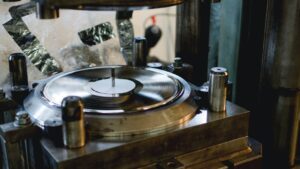
The pressing process starts long before you drop a tonearm onto a record. Engineers create a lacquer from the master recordings – sometimes using DMM (Direct Metal Mastering) – and send it off to a pressing plant for production.
Before the final vinyl gets manufactured in large quantities, the plant presses only a handful of copies, typically somewhere between five and 25 records. These are made on black vinyl, often without a printed center label, and are handed off for evaluation and listening.
This small quantity is what collectors call test pressings. They exist solely to check audio quality, catch any defect in the groove, and ensure the record doesn’t skip, click, pop, or produce unwanted surface noise and distortion.
Why Are Test Pressings Made?
Test pressings are made for one critical reason: quality control. Once you commit to a full production run, there’s no turning back without serious cost and turnaround delays. A single imperfection caught at this stage can save a label from pressing thousands of flawed records.
Artists, producers, and engineers listen through each copy on a quality turntable, often cross-reference multiple copies, and submit their feedback before approving the final product.
The goal is to review and approve the audio before anything goes to mass production.
If something sounds off – static between tracks, an improper cut, a pop mid-song, or distortion on a loud passage – those potential issues are flagged and corrected. Only then does the record move into full production.
Think of it like a final inspection before a product ships. Bands like Skinny Puppy (fronted by Nivek Ogre), with production contributions from figures like Martin Atkins, have records whose test pressings became prized items because the sound was closely monitored and refined before release.
What Makes Test Pressings Valuable to Collectors?
Here’s where it gets interesting for anyone who collects vinyl. A vinyl test pressing is, by definition, extremely limited. The number of test pressings made for any given record is tiny compared to what eventually goes to market.
Because they’re made in limited quantities before the commercial sleeve, artwork, or proper center label is attached, they often come with a plain white label – sometimes called a white label record – or a handwritten identifier. Some come with a certificate of authenticity, though not all do.
To collectors, a test press is the closest thing to a phonograph record in its rawest form. It’s a sonic artifact, a window into the production process before any compromises were made for mass appeal or commercial distribution.
Audiophiles also prize them because the audio quality of an early pressing from an original stamper is often noticeably better. There’s less wear on the production tools, which can translate directly into cleaner, more dynamic playback.
How to Identify a Test Pressing
Spotting a test press takes a careful eye and some knowledge. Here’s what to look for:
- A plain or white label with no printed artwork
- Handwritten or stamped matrix numbers in the dead wax
- Minimal or no sleeve – just a plain white or brown paper cover
- Very low catalog or copy numbers
- Sometimes a “TP” or “TPS” notation in the dead wax
If you’re unsure, verification through a knowledgeable buyer or dealer is always the smart move.
An honest evaluation from experienced record buyers who knows what they’re looking at can save you from overpaying – or from unknowingly sitting on something valuable.
Do Test Pressings Show Up in Regular Collections?
Yes, more often than you might think. Estate collections, DJ libraries, and indie label archives sometimes include test pressings that were never properly identified. A record with a white label and a handwritten notation might look like nothing special, but it could be a pre-release pressing from a beloved album’s original production cycle.
This is exactly why getting a professional set of eyes on any collection matters. Whether the records came from a music industry contact, a studio, or a radio station, the collection deserves a proper look before anything is sold off or discarded.
Conclusion
Test pressings sit at a fascinating intersection of quality standards, audio history, and collector culture. Whether you’re a dedicated audiophile chasing the best analog sound or a collector hunting for rare finds, understanding what a test press is and why it exists only adds to your appreciation of vinyl. If you think your collection might include one – or if you’re simply ready to turn records into cash – reach out to Cash For Records at 216-315-8216 for an honest, no-pressure evaluation.