

Record Pi vs. Vinyl Flat: Two Ways to Fix a Warped Record
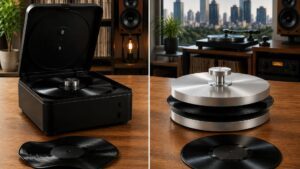
If you have ever pulled a phonograph record out of storage and noticed it looked slightly off – bowed in the middle, curved at the edges, or just not sitting right on the platter – you already know the problem. The good news is that warped vinyl is often fixable. The question is which tool makes sense for your collection: Record Pi or Vinyl Flat.
What Are Record Pi and Vinyl Flat?
Both are purpose-built devices designed to flatten warped LPs using a combination of temperature, pressure, and time. Neither is a measuring tool – both are physical flatteners that sandwich a record between plates and apply controlled heat until the warp relaxes out.
The difference comes down to how that heat is controlled and how hands-on the process is.
- Vinyl Flat uses two metal plates and protective liners to press a record flat. It can be run at room temperature (slow, but low-risk) or paired with a heating accessory to speed things up. It’s straightforward, mechanical, and doesn’t require an app or Wi-Fi – you set it up, apply heat manually, and check on it yourself.
- Record Pi takes the same basic concept – heat, pressure, time – and adds smart, connected temperature control. It lets you monitor and adjust the exact temperature from a phone app, set automatic cool-down times, and even use voice commands through Alexa or Google Home. For collectors who want precision and convenience without babysitting an oven, that’s the appeal.
Record Pi vs Vinyl Flat: What Is the Main Difference?
Both systems use heat and pressure, but they differ in how much control and automation they provide.
Temperature Control
Record Pi offers adjustable digital temperature control. Users can select a precise target rather than relying on preset heat levels. This may be useful for collectors who want more control when working with records of different thicknesses or formulations.
Vinyl Flat uses the Groovy Pouch’s low, medium, and high settings. Users identify the appropriate setting with a thermometer and manage the heating time manually.
Remote Monitoring
Record Pi connects to the internet and can be monitored through a compatible mobile device.
Users can remotely adjust the temperature or turn off the heat, although the record must still remain in the system during the required cooling period.
Vinyl Flat does not promote remote or app-based monitoring. The user must control the heating cycle directly and keep track of the time.
System Design
Record Pi packages its pressure plates, heating case, and connected controller as one integrated system.
Vinyl Flat is more modular. The clamping plates form the main flattener, while the Groovy Pouch supplies controlled heat. This may appeal to collectors who prefer a simpler, manually operated setup.
Ease of Adjustment
Record Pi allows the user to adjust temperature and time separately. That can provide more flexibility, but it still requires care and experimentation.
Vinyl Flat relies more heavily on manually adjusting the duration of each heating cycle. Its instructions recommend beginning conservatively and increasing the heating time in small increments if the record remains warped.
Can Record Pi or Vinyl Flat Fix Every Warped Record?
No record flattener can be expected to repair every warp.
Results can depend on:
- The type and severity of the warp
- The record’s thickness and material
- Previous heat exposure
- The temperature used
- The length of the heating and cooling cycles
- Whether the grooves or the surface were already damaged
A mild dish warp may respond differently from a severe edge warp or a record with several complex distortions. Some records may become flatter after one cycle, while others may require repeated treatment. A severely damaged record may never become safely playable.
Both manufacturers warn that excessive heat can further deform a record or damage its grooves. Vinyl Flat specifically recommends starting with lower heat and shorter cycles, while Record Pi emphasizes precise temperature control to reduce the risk of damage.
Always follow the instructions provided with the specific system. Testing the process on a common, low-value record before treating a rare pressing is also a sensible precaution.
Does Flattening a Record Increase Its Value?
Flattening may improve how a record sits on the platter and, in some cases, how reliably it plays. However, it does not automatically make the record valuable or restore it to its original condition.
A record’s value still depends on factors such as:
- Artist, title, and pressing
- Rarity and demand
- Groove wear and scratches
- Surface noise and playback quality
- Label and catalogue details
- Sleeve and cover condition
- Overall visual grade
Flattening cannot remove scratches, repair damaged grooves, eliminate wear, or replace a missing sleeve. A repaired record should also be described honestly when it is offered for sale.
The main goal should be to make the record flatter and more playable, not to create a higher condition grade than the record deserves.
Which Record Flattener Is Better?
Record Pi may be more suitable for collectors who prefer precise digital temperature control, connected monitoring, and an integrated system.
Vinyl Flat may be more appealing to someone who wants a simpler, manually controlled setup and is comfortable monitoring temperature and heating time independently.
The better choice depends on your budget, the number of warped records you plan to treat, and how much control you want over the process. Neither product guarantees success, and both require patience and careful handling.
Does the Tool You Use Change Collector Value?
Somewhat – but it’s the outcome that matters, not the brand of flattener. In the vinyl collecting market, serious buyers care about how a record plays and sits on the platter, not which flattening method got it there.
A record that plays quietly, tracks properly, and sits flat is worth real money. One that still skips, skates, or distorts after an attempted fix loses value fast – regardless of its rarity. This matters whether you’re holding onto virgin vinyl pressings of classic jazz or hunting down rare soul 45s.
Should You Flatten Records Before Selling Them?
You do not necessarily need to flatten every warped record before selling a collection.
Attempting a repair without experience could damage a rare or otherwise desirable pressing.
Before treating a valuable record, consider whether the possible improvement justifies the risk.
In many cases, it is better to disclose the warp and allow an experienced buyer to evaluate the record in its current condition.
Cash For Records evaluates collections based on pressing details, rarity, demand, physical condition, and overall resale potential. If you have a substantial record collection you are considering selling, call 216-315-8216 to discuss an honest, no-pressure evaluation.