
How to Spot an LP Record in Jacksonville
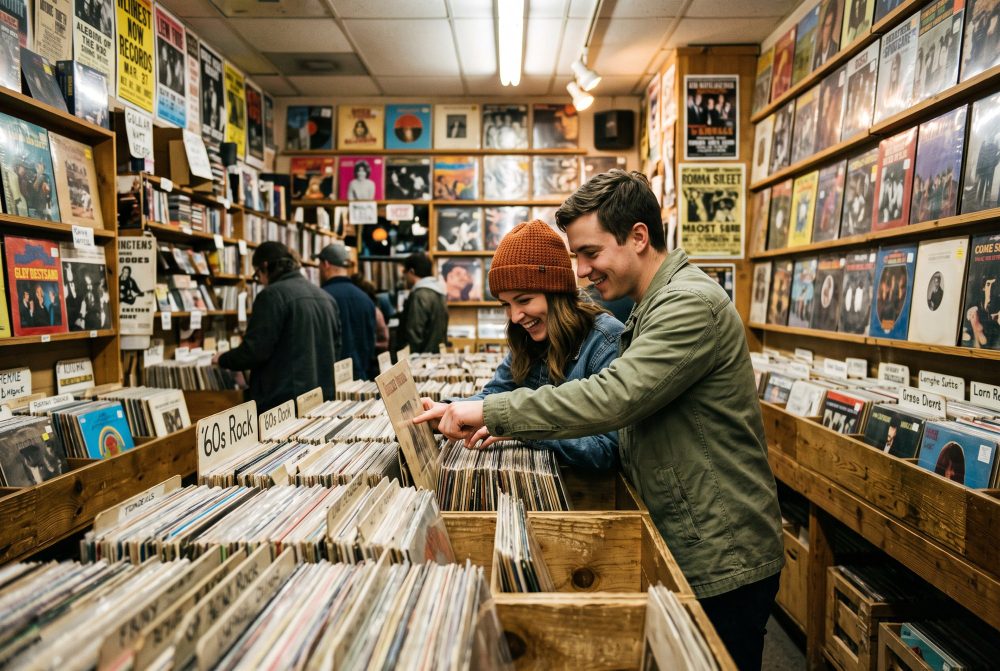
An LP is a 12-inch vinyl record with a small center hole, made to play at 33⅓ revolutions per minute and usually holding a full album. The label normally prints the speed, and the disc sits in a square cardboard jacket. Here at Cash For Records in Jacksonville Beach, FL, picking LPs out of mixed boxes is a regular part of the in home record buying visits we make.
Knowing the format does more than tidy a shelf. It tells Paul how to grade a record and what it contributes when we sell vinyl collections for cash. It also tells you what you are holding before you decide what to do with it. Size, speed and jacket together identify most LPs at a glance.
What Counts as an LP?
LP stands for long playing. Columbia introduced the format in 1948, and it has been the standard album format ever since. Before it arrived, an album meant a set of heavy 78s, each holding only a few minutes of music per side. That change is why records from the 1950s onward look so different from the shellac discs that came before.
The LP fit a whole album onto one disc by cutting finer grooves and spinning more slowly. In the format’s early years, some LPs were pressed at 10 inches instead of 12. Those smaller records still count as LPs, even though they are easy to mistake for 78s.
Four Quick Checks for an LP
You can confirm an LP without a turntable or any special tools. Work through these checks in order and stop once the answer is clear.
- Measure the disc. An LP is 12 inches across, a 7 inch record is a little over half that size, and a 10 inch falls in between.
- Check the center hole. LPs have a small hole that fits a standard turntable spindle, while many American 45s have a much wider one.
- Read the label. Most LPs print 33⅓, 33 or “Long Playing” on the label or jacket, and each side usually lists several songs.
- Look at the grooves. Under a lamp, the gaps between songs show as smooth bands across an LP side, and a 12 inch single usually shows fewer of them.
When two of the four checks point to an LP, it almost always is one. For exact measurements to check with a tape measure, see the notes on vinyl album size. The usual exception is the 12 inch single, which shares the size but not the purpose, and the next section covers it.
How Is an LP Different From a 12 Inch Single or a 10 Inch Record?
Three formats share the large disc look, and they are easy to mix up in a box, particularly in DJ collections and older estates. The table sets them side by side.
Format | Size | Usual speed | Typical contents |
LP | 12 inches | 33⅓ rpm | A full album, several songs a side |
12 inch single | 12 inches | Usually 45 rpm | One or two tracks a side, often extended mixes |
10 inch record | 10 inches | 33⅓ rpm or 78 rpm | A short early LP, or a heavier shellac 78 |
The 12 inch single caught on with DJs in the 1970s, which is why so many sit in DJ crates. It looks like an LP until you read the label or count the tracks. A heavy, rigid 10 inch disc that does not flex is more likely a shellac 78, which can crack if dropped. EPs add another wrinkle, and a guide to the difference between singles, EPs and albums untangles those names.
Leave the sorting to Paul.
Nothing needs separating before the visit, because he works through mixed boxes on site. Describe the collection on the phone, and he will tell you whether it fits an upcoming buying trip.
Why LP Details Matter Before You Sell
Once a record is confirmed as an LP, the next question is which LP. Six factors set its value: artist, genre, pressing, rarity, current demand and condition. A Near Mint copy, close to perfect with no visible defects, can be worth far more than a Very Good copy of the same album, which plays well but has occasional pops and light wear. An early pressing can also move the number, which is why Paul reads the label along with the grooves.
The jacket carries part of that value. Florida heat and humidity are usually harder on jackets than on the vinyl. A garage or attic box may show ring wear, the circular mark a disc rubs into its cover, along with split seams or mildew, while the records inside are still sound. Leave those boxes untouched, since a well meant wipe with the wrong cloth can do more damage than the dust.
How We Grade LPs in Your Home
Paul Robinson has been buying records since 2001, starting in Cleveland, Ohio. He still makes the visits himself for our family run business in Jacksonville Beach, FL. He brings his own equipment, so you do not need a turntable. Each LP is play graded, meaning listened to for skips and surface noise, then visually graded under strong light, and the jacket is judged on its own.
He then explains how he reached his offer, which covers everything he can buy rather than only the famous titles. Accept it and you are paid at the visit, with Paul packing and carrying the records out, so there is nothing for you to list, pack or ship. In our Google reviews, Ashley S. described him as “honest and direct. He showed up when he said he would.”
Share what the shelves hold and we will do the rest.
Send us the rough count, the formats, the main genres and where the records are stored is enough to judge the fit. You can call about any size of collection, and if you turn his offer down, nothing leaves the house.
Related Topics: