
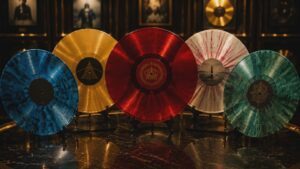
Why Rare Colored Vinyl Records Are the Crown Jewels of Any Collection
There is something undeniably magnetic about pulling a colored vinyl record off the shelves and holding it up to the light. The way a red vinyl disc or a transparent green pressing catches the eye is hard to explain to someone who has never collected vinyl. But record collectors know exactly what that feeling is.
Colored vinyl is not just about aesthetics. It carries history, exclusivity, and often serious monetary value.
What Makes Color Vinyl So Special?
The story of color in phonograph record history stretches back further than most people realize.
Early formats like the Blue Amberol Records and the phonograph cylinder were sometimes produced in colors as a way to distinguish product lines. Even the LP record era, which gained momentum after 1948, saw occasional colored pressings used as promotional tools or genre markers.
By 1970, limited edition colored vinyl had become a recognized way for labels to generate excitement around a release. Artists used color to signal something unique – a debut pressing, a live recording, or an exclusive fan club release.
Why Collectors Prize Certain Colors and Formats
Not all color vinyl is created equal. A transparent, clear pressing tells a different story than a brown or purple disc. Splatter vinyl, where multiple colors are flung across the surface, has become one of the most collectible formats in modern pressings.
Here is what typically elevates a colored record above standard black:
- Limited production runs – Many colored pressings were manufactured in quantities far smaller than the original black version.
- Artist involvement – Some colors were chosen directly by the artist or their label as part of a concept.
- Format exclusivity – A 2 LP set pressed on red colored vinyl for a single shop or music chain creates immediate scarcity.
Understanding the differences between original and first pressings can also help you determine whether a colored record is genuinely rare or simply a modern reissue dressed up to look collectible.
Famous Examples That Drive the Market
The Grateful Dead, the Beatles, and countless funk and soul artists released special pressings that now command serious attention. A yellow or green variant of a beloved album – especially one that includes an original booklet – can be worth multiples of its standard black counterpart.
Knowing how to tell if a vinyl record is an original or a reissue is essential before you curate or sell a collection built around these pieces.
Does Color Affect Sound Quality?
This is a fair question. Purists often debate whether color vinyl produces sound comparable to standard black pressings. The honest answer is that it depends on the pressing quality and the materials used. Some transparent or colored pressings from boutique labels rival any black vinyl in audio performance.
Learning what makes a vinyl record valuable goes beyond color alone. Condition matters enormously, and understanding vinyl record grading standards will help you assess any unusual find accurately.
It also helps to understand how record condition affects its resale value before bringing a collection to market.
Thinking About Selling Your Colored Vinyl?
If you have colored vinyl records sitting in storage, Cash For Records is ready to take a serious look. Since 2001, the team has been evaluating LPs, 45s, and rare pressings across a wide range of genres – and they travel directly to you to make the process straightforward.
Conclusion
Rare colored vinyl records occupy a category all their own. They blend visual appeal with musical history and genuine collectible value in a way that standard pressings simply cannot match. Whether you are building a collection or considering selling, knowing what you have – and who to trust – makes all the difference.
Cash For Records has spent over two decades helping people in Cleveland and beyond get fair, honest value for their vinyl. Call 216-315-8216 to start the conversation.