
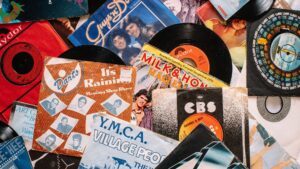
If you’ve found yourself staring at your vinyl collection and wondering if mono or stereo vinyl will make your turntable sing, you’re not alone.
Understanding the difference between mono and stereo can feel a bit daunting, but it’s essential knowledge for any record enthusiast. Let’s clear up the confusion about these two formats and explore which might sound best on your system.
Understanding Mono and Stereo Vinyl
What Is Mono Vinyl?
Mono, short for monaural or monophonic sound, involves a single audio channel. It provides sound through one speaker or both speakers producing the same signal, resulting in a focused, centered audio experience.
Many classic recordings, particularly those before the 1960s, were released in mono. These old mono formats capture music in one channel, presenting a unified sound stage.
What About Stereo Vinyl?
Stereophonic sound, or stereo, feeds two speakers with two separate audio channels – left and right.
This creates a sense of dimension and spatial audio across the sound stage, sometimes making you feel front row at a concert. Stereo vinyl began to gain popularity in the late 1950s, allowing recorded sound to replicate the natural way our ears perceive audio.
The Recording Process: Mono and Stereo
The recording process differs significantly between mono and stereo. In mono recording, all audio components are combined into one channel during audio mixing. Conversely, stereo recordings use multiple microphones to capture sound from different directions, crafting an immersive experience when played back on a stereo system.
Why Choose Mono Records?
- Original Mono: Offers an authentic experience as intended by the artists, especially with classic rock bands like The Beatles or jazz legends.
- Focus on Music: Without extra audio channels, the music is the main attraction, often resulting in a cleaner bass sound.
- Dedicated Mono Cartridge: Works best with mono records, reducing noise from wear and ensuring a sound quality that audiophiles crave.
Why Opt for Stereo Records?
- Two Speakers Experience: Delivers a rich, lively performance on your stereo system.
- Reproduction of Live Performances: With stereo sound, listeners often report feeling like they’re in a live setting.
- Vinyl LP with Spatial Awareness: Great for modern stereo mix, providing depth and separation between precise audio elements.
Mono vs Stereo: What’s the Difference?
Sound Quality and Playback
- Mono Sound: Offers consistency and simplicity, perfect for early stereo recordings, which were nearly mono.
- Stereo Sound: Expands the audio experience, often revealing details you might miss with mono.
If you’re using a stereo cartridge or a mono cart designed specifically for mono lps, each plays a pivotal role in sound delivery. A mono signal processed through a stereo system might result in fake stereo, losing the authenticity of the mono track.
How Do They Affect Your Listening Experience?
Choosing between stereo and mono pressings can change how you perceive your records.
Listen on headphones for stereo audio to truly appreciate the stereo format’s depth. However, if authenticity from the track in mono is your pursuit, a dedicated mono lp might be the preference.
Modern Take: Mono and Stereo Today
The Stereo Format Advantage
While stereo is the standard today, there’s something timeless about mono. Stereo rather represents our contemporary appetite for comprehensive sound reproduction, using a stereo cartridge to underscore this desire.
When Mono May Sound Better
Mono jazz records or certain mono releases may sound better than stereo versions, especially if the latter was remixed from the original recordings. Audiophiles often debate whether some tracks sound great or even better in mono, thanks to the direct audio channel delivery.
Frequently Asked Questions
How Can I Tell If a Record Is Mono or Stereo?
Check the sleeve or label of your LP. It often specifies whether a record is mono or stereo.
Alternatively, observe how the record sounds when played. Mono records sound centered, while stereo copies will pop with directionality.
Do I Need Special Equipment to Play Mono Records?
To really get the most out of mono vinyl, using a mono cartridge or a turntable with a mono switch can help. It’s also possible to play mono records on a stereo system, but the experience may differ.
Can I Convert from Mono to Stereo or Vice Versa?
You can enjoy your mono records on stereo systems and vice versa, but consider that the sound may alter slightly when played back. If one prefers stereo, the stereo remixes might provide an exciting alternative to the mono version.
Conclusion
Your turntable’s sound quality can vastly improve by picking the right format for your personal taste. Whether you were hooked by the original mono for its authentic touch or mesmerized by the true stereo’s expansive soundscape, each choice tells a unique story through the groove of the record.
And if you’re sorting a collection of mono and stereo pressings and want to understand what you have before selling, Cash For Records can help you evaluate your records and get a straightforward cash offer based on format, condition, and collectability.
Ready to delve into your vinyl treasures? Explore our vinyl record grading guide to ensure each play is as pristine as your last. Share your vinyl experiences with fellow record collectors and stay tuned for our latest updates! Call us now.