
Lathe-Cut Records vs. Pressed Vinyl: What Is the Difference?
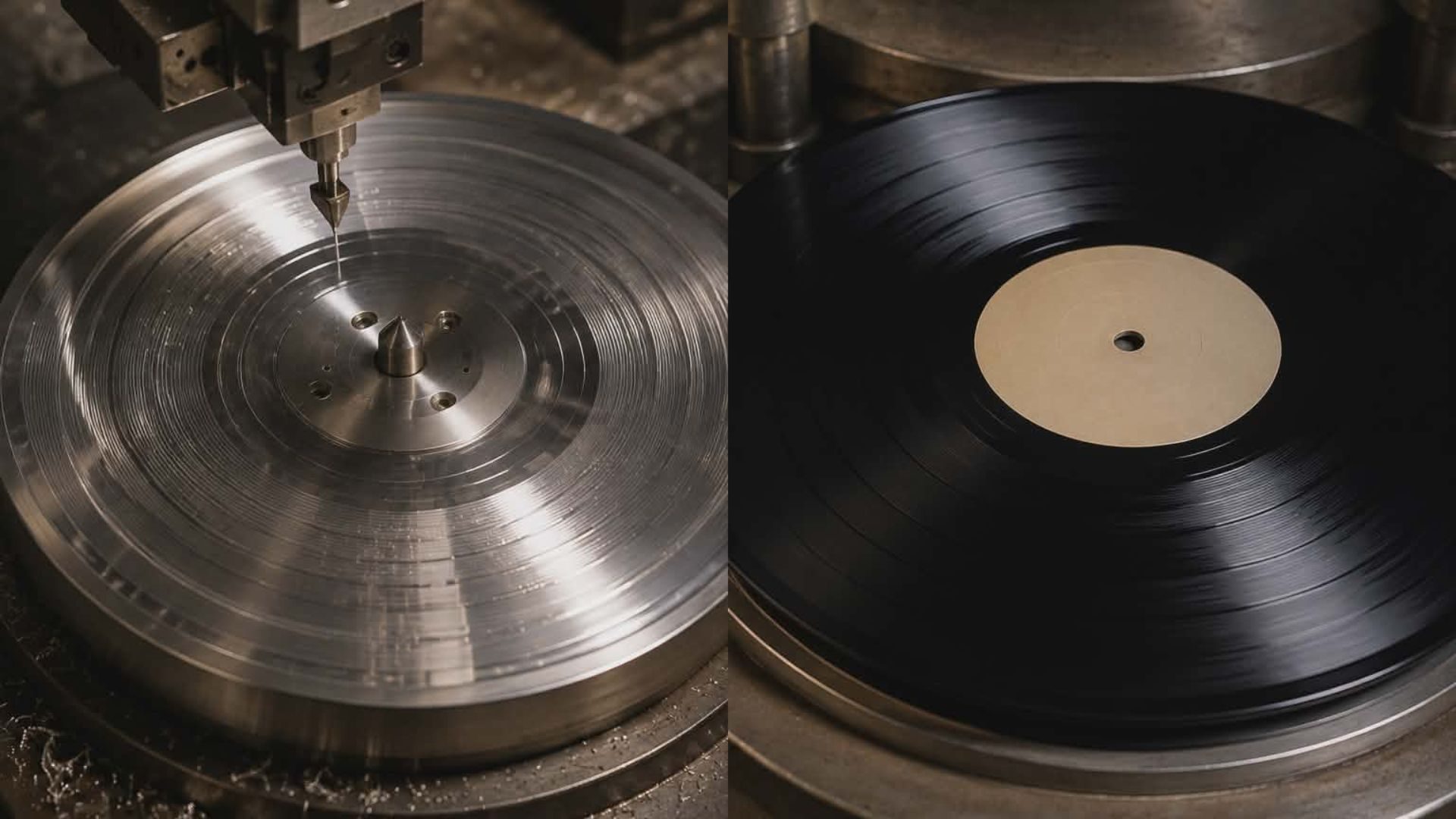
If you have spent time looking through record stores, independent music releases, or unusual record collections, you may have come across the term “lathe cut.” A lathe-cut record can look similar to a standard vinyl record, but the two are created differently and may appeal to different types of listeners and collectors.
Here is how lathe-cut records compare with traditionally pressed vinyl.
What Is a Pressed Vinyl Record?
A pressed vinyl record is the format most people associate with albums and singles sold in record stores. In traditional vinyl production, mastered audio is cut into a lacquer disc. That lacquer is then used in a plating process to create metal stampers.
During pressing, heated vinyl material is placed between the stampers, which form the grooves in the record. This process allows a pressing plant to manufacture many copies of the same album or single efficiently.
Pressed vinyl is commonly used for commercial releases because it is suitable for larger production runs. However, the sound and value of any individual record still depend on factors such as mastering, pressing quality, condition, rarity, and collector demand.
What Is a Lathe-Cut Record?
A lathe-cut record is created individually rather than pressed from a set of stampers. Audio grooves are cut or embossed directly into a playable blank disc using a cutting lathe.
Because each disc is made one at a time, lathe cutting is often used for:
- Small-batch releases
- Limited-edition merchandise
- One-of-a-kind custom records
- Independent artist releases
- Personal recordings or gifts
Lathe-cut blanks may be made from polycarbonate or other materials, depending on the maker and production method. This means that lathe-cut records can vary in appearance, sound, thickness, and playback characteristics.
Lathe-Cut Records vs. Vinyl: Key Differences
Although lathe-cut records and pressed vinyl can both be played on compatible turntables, they are not produced in the same way.
Production Method
Pressed records are manufactured from stampers, making it possible to produce many copies of the same release. Lathe-cut records are made individually by cutting or embossing grooves directly into a blank disc.
For artists or labels planning a larger release, pressing may be the more practical option. For someone who needs only a few copies or wants a customized disc, lathe cutting can offer greater flexibility.
Quantity and Availability
Traditional pressing is generally designed for larger batches because producing lacquer masters, metal parts, stampers, labels, and packaging requires setup before the full run begins.
Lathe-cut records do not require stampers, so they can be useful for short runs or custom orders. This is one reason independent artists and small labels may use lathe cutting for limited releases or specialty merchandise.
Sound Quality
Sound quality cannot be judged by format alone. A professionally made pressed record may offer consistent playback across multiple copies, while a carefully produced lathe-cut record can still provide an enjoyable listening experience.
Several factors affect how either type of record sounds, including:
- The original audio source
- Mastering decisions
- Production quality
- Disc material
- Turntable setup
- Stylus condition
- Storage and handling
Some lathe-cut records may sound different from traditionally pressed vinyl in volume, surface noise, or overall presentation. That does not automatically make them poor-quality records. It means the production method and intended use are different.
Durability
Durability depends on the material, manufacturing quality, storage conditions, and handling of the record. A pressed vinyl record can become scratched, warped, or damaged if stored improperly. A lathe-cut record may also experience wear or playback issues depending on the blank material and how it was made.
For either format, proper care matters. Records should be stored upright in protective sleeves, kept away from extreme heat and moisture, and played on properly maintained equipment.
Collector Value
A record is not valuable simply because it is pressed vinyl or lathe-cut. Collector value depends on the specific item.
Factors that can affect value include:
- Artist or band
- Release details
- Label information
- Rarity
- Condition
- Demand among collectors
- Whether the recording contains unique or unreleased material
- Documentation or provenance
A lathe-cut record associated with a limited release, notable artist, or unusual recording may interest collectors. A commercially pressed record may also be desirable if it is rare, in strong condition, or connected to a sought-after release.
Who Uses Lathe-Cut Records?
Lathe-cut records are often used by independent musicians, small labels, artists, and people creating customized audio keepsakes. Because they can be produced in very small quantities, they offer an option for releases that may not require a full vinyl pressing run.
For example, an artist may create a small number of records for a concert, a fan club release, or a special project. Someone may also order a custom record containing personal audio, a live performance, or a meaningful recording.
Pressed vinyl, on the other hand, remains common for albums and singles intended for broader distribution.
How Can You Tell Whether a Record Is Lathe Cut or Pressed?
It is not always easy to identify a lathe-cut record immediately, especially if you are unfamiliar with the format. However, a few details may provide clues:
- It may be part of a very limited or custom release.
- It may have a handwritten, custom, or simple label.
- It may appear thicker or feel different from standard pressed vinyl.
- It may have unusual packaging or minimal printed information.
- The seller, artist, or release notes may identify it as lathe cut.
If you are sorting through an inherited collection or a box of unusual records, avoid assuming a disc has little value simply because it looks different from a standard retail release.
Does the Difference Matter When Selling Records?
Yes. Whether a record was commercially pressed, custom-made, issued in a limited run, or connected to a notable artist can affect collector interest. However, the format is only one part of determining value.
Cash For Records evaluates vinyl collections that may include LPs, 45s, 78s, and 12-inch singles in genres such as rock, jazz, blues, soul, and R&B. If you are unsure what types of records you own, having the collection reviewed can help you better understand what may be worth selling.
Conclusion
Lathe-cut records and pressed vinyl are created for different purposes. Pressed vinyl is suited to producing larger numbers of commercial releases, while lathe cutting makes custom discs and small-run projects possible. Sound, durability, and value depend on much more than the production method alone.
If you have inherited or collected vinyl records and want to learn what they may be worth, Cash For Records can help. The company has been buying record collections since 2001. Call 216-315-8216 for a straightforward evaluation of your records.